
How to Choose Mudroom Flooring for Kids and Pets in Broken Arrow, OK
Figuring out how to choose flooring for mudroom with kids and pets is one of those decisions that seems simple until you start shopping — and then suddenly you’re drowning in acronyms, wear ratings, and conflicting advice. The mudroom is the single most abused floor in your home. It takes muddy cleats, wet paws, dropped backpacks, dripping umbrellas, and the occasional dog who decides to shake off rainwater right at the door. Here in Broken Arrow, OK, add red clay soil and unpredictable Oklahoma weather to the mix, and the stakes get even higher.
At Emerald House Design Co, we’ve installed mudroom floors for families with everything from toddlers to Great Danes. This guide walks you through exactly what matters — and what doesn’t — so you can choose a floor that still looks great five years from now.
The Four Non-Negotiables for a Family Mudroom Floor
Before you fall in love with a color or pattern, your mudroom floor must pass four tests: water resistance, scratch resistance, slip resistance, and easy cleanability. Miss any one of these and you’ll regret it.
Water resistance comes first because the mudroom is a transitional wet zone. Standing water from boots and wet dogs will destroy unsealed wood and laminate seams over time. Scratch resistance matters because dog nails act like sandpaper on soft finishes — large breeds especially. Slip resistance protects both kids sprinting through the door and senior pets whose joints can’t handle a skating-rink surface; falls are a serious household hazard, and the CDC tracks millions of fall-related injuries each year. Finally, cleanability determines whether maintenance takes thirty seconds with a damp mop or becomes a weekly scrubbing project.
Porcelain Tile: The Durability Champion
If we had to pick one material for the most demanding households, porcelain tile wins. It’s essentially impervious to water, can’t be scratched by pet nails, and shrugs off dropped gear. Look for tiles with a textured or matte finish rather than polished gloss, and check the slip-resistance rating — the Tile Council of North America publishes standards that manufacturers use to certify how a tile performs when wet, which is exactly the condition your mudroom will face.
The trade-offs are real but manageable. Tile is hard and cold underfoot, which matters less in a pass-through space than in a kitchen. Grout lines can stain, so choose a darker grout and have it sealed. And in Oklahoma’s climate, tile pairs beautifully with a small electric radiant mat if you want to take the winter chill off.
Luxury Vinyl: The Comfort-Meets-Toughness Pick
Luxury vinyl plank and tile have become the most popular mudroom choice for families, and for good reason. Quality rigid-core products are fully waterproof, noticeably softer and warmer underfoot than tile, quieter under dog nails, and convincing in their wood and stone looks. Industry resources from the Resilient Floor Covering Institute can help you understand product certifications, including indoor air quality programs worth checking if anyone in your household has sensitivities.
The key with vinyl is wear layer thickness. For a household with kids and pets, don’t go below a 20-mil wear layer. Thinner products are fine in low-traffic bedrooms but will show pet scratches in a mudroom within a couple of years.
What About Real Wood?
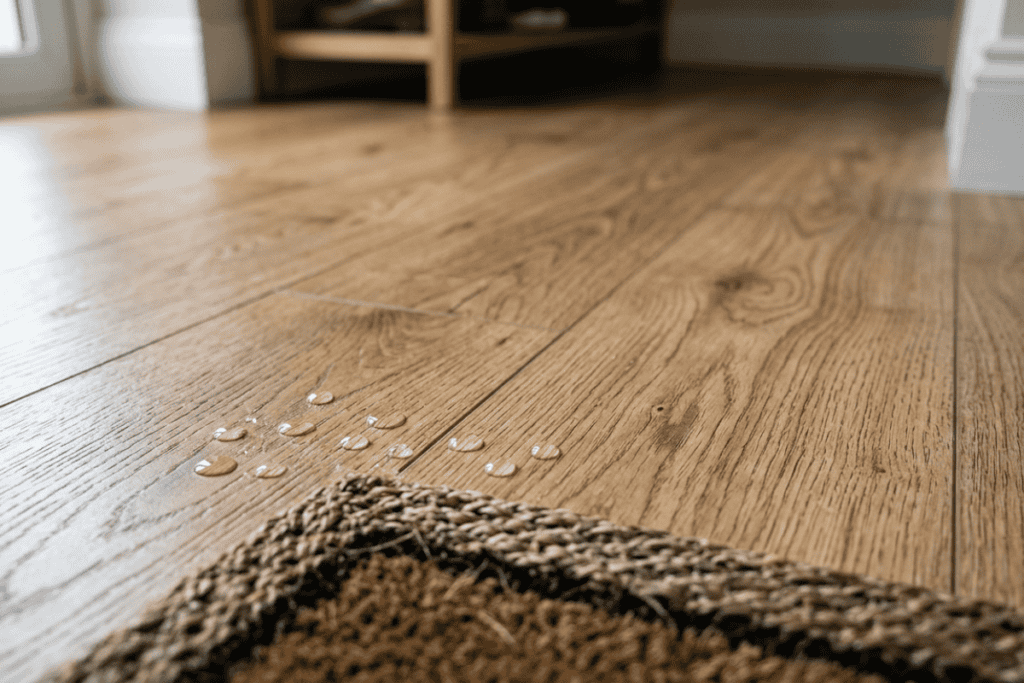
We love hardwood — just usually not in a mudroom. Even site-finished hardwood with a commercial-grade finish struggles against standing water and constant grit. If your heart is set on a wood look in the mudroom, the honest answer is wood-look porcelain or premium vinyl plank. If you’re extending hardwood from adjacent rooms for visual continuity, the National Wood Flooring Association offers maintenance guidance that can extend its life — but plan on absorbent mats at every entry point and a strict towel-the-dog policy.
Don’t Forget the Pet-Specific Details
A few design choices make daily life with animals dramatically easier. Choose a floor color and pattern with some visual texture — solid dark floors show every paw print and hair tuft, while mid-tone varied patterns hide everything between cleanings. Keep transitions between rooms flush or low-profile so older pets don’t trip. And keep nails trimmed; veterinary organizations like the AVMA note that routine nail care benefits both your pet’s joint health and your floors. Two finishing touches complete the system:
- A recessed or framed washable mat zone directly inside the door to capture the first two steps of dirt
- A wall-mounted hook-and-bench unit so wet gear gets up off the floor immediately
Why Choose Emerald House Design Co
Choosing the material is only half the job — installation quality determines whether your floor actually performs. At Emerald House Design Co, we help Broken Arrow, OK families select, source, and professionally install mudroom flooring as part of complete mudroom and entryway remodels, including built-in storage, benches, and drop zones designed around your routine. We know which products survive Oklahoma clay, kid traffic, and pet claws because we’ve watched them perform in real local homes.
Conclusion
When you’re deciding how to choose flooring for mudroom with kids and pets, let the four non-negotiables lead: waterproof, scratch-proof, slip-resistant, and easy to clean. Porcelain tile and rigid-core luxury vinyl check every box; hardwood usually doesn’t. Pair the right material with smart details like a mat zone and built-in bench, and your mudroom becomes the hardest-working — and best-looking — fifty square feet in your house. If you’re ready to make it happen, reach out to Emerald House Design Co and let’s design your family’s perfect entry.
Ready for a mudroom that handles your family’s chaos with style? Contact Emerald House Design Co today to schedule your consultation.
Frequently Asked Questions
What is the most durable mudroom flooring for pets?
Porcelain tile is the most durable option because it resists scratches from pet nails, is fully waterproof, and handles heavy traffic. Rigid-core luxury vinyl with a 20-mil or thicker wear layer is a close second with more comfort underfoot.
Is luxury vinyl plank waterproof enough for a mudroom?
Yes. Quality rigid-core luxury vinyl plank is fully waterproof and handles wet boots, dripping coats, and pet water bowls without damage. Just ensure seams are properly installed so water cannot reach the subfloor.
What flooring should I avoid in a mudroom?
Avoid solid hardwood, traditional laminate, and carpet. Hardwood and laminate are vulnerable to standing water, while carpet traps mud, odors, and pet hair and is difficult to sanitize.
What color floor hides dirt best in a mudroom?
Mid-tone floors with visual variation — like a varied wood grain or stone pattern — hide dirt, paw prints, and pet hair best. Very dark and very light solid colors show the most debris.
How much does mudroom flooring cost installed?
Most mudroom flooring projects run $7 to $20 per square foot installed depending on material. Because mudrooms are small, total cost typically lands between $500 and $2,000, making it an affordable high-impact upgrade.